How it works
Two processes, end to end
Not a feature list - the actual screens, in the order a quality manager meets them. A controlled document from draft to its next revision, and an audit finding followed all the way to a closed CAPA.
Every screen below is the shipped interface, shown with sample data.
Document control
A procedure, from first draft to its next revision
Controlled documents carry their own approval, distribution and review schedule. Nothing here is a status field someone remembers to update.
Step 1
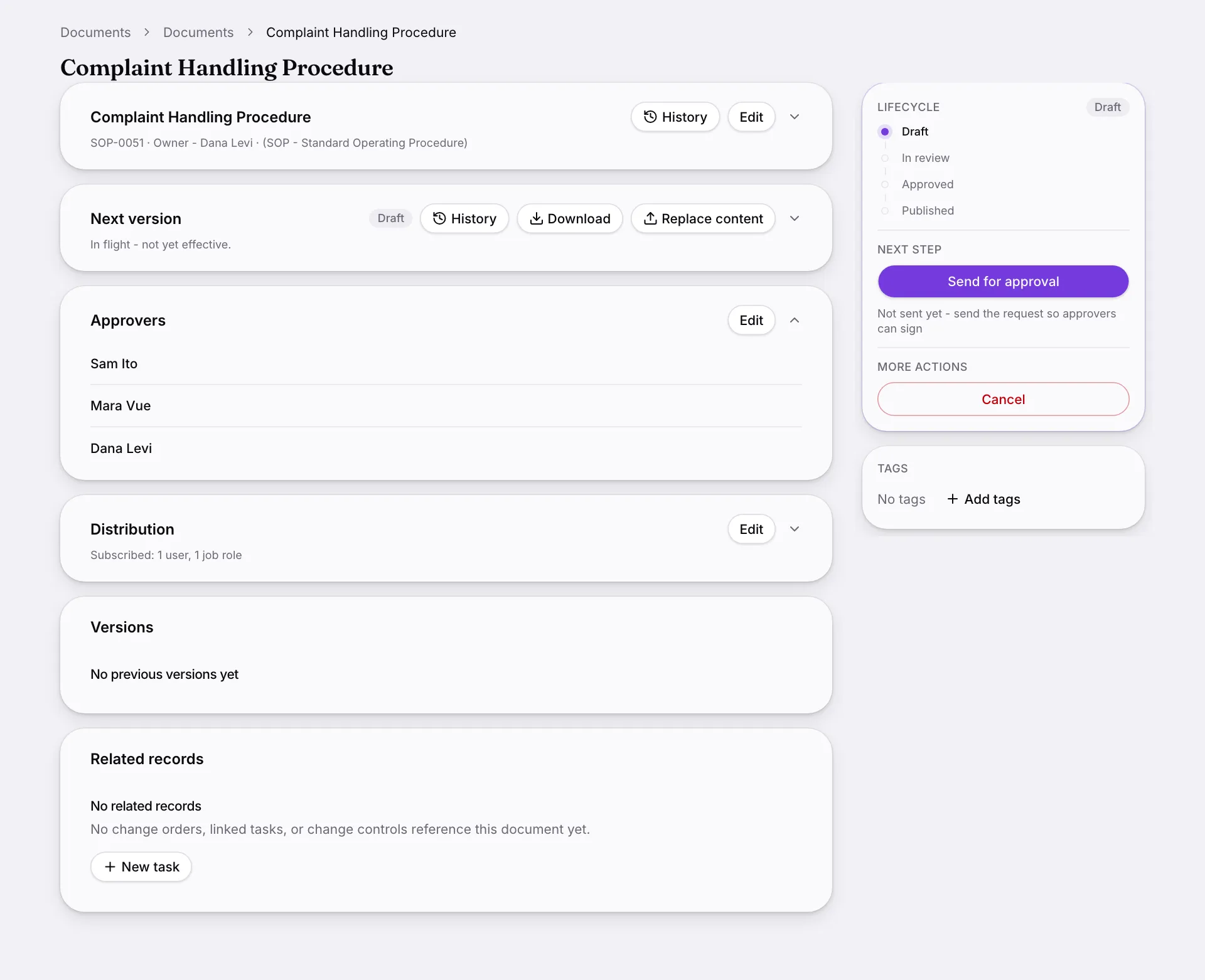
Draft
The record exists from the first save: owner, document type, the approvers who will sign it, and who it gets distributed to - all named before it goes anywhere.
Step 2
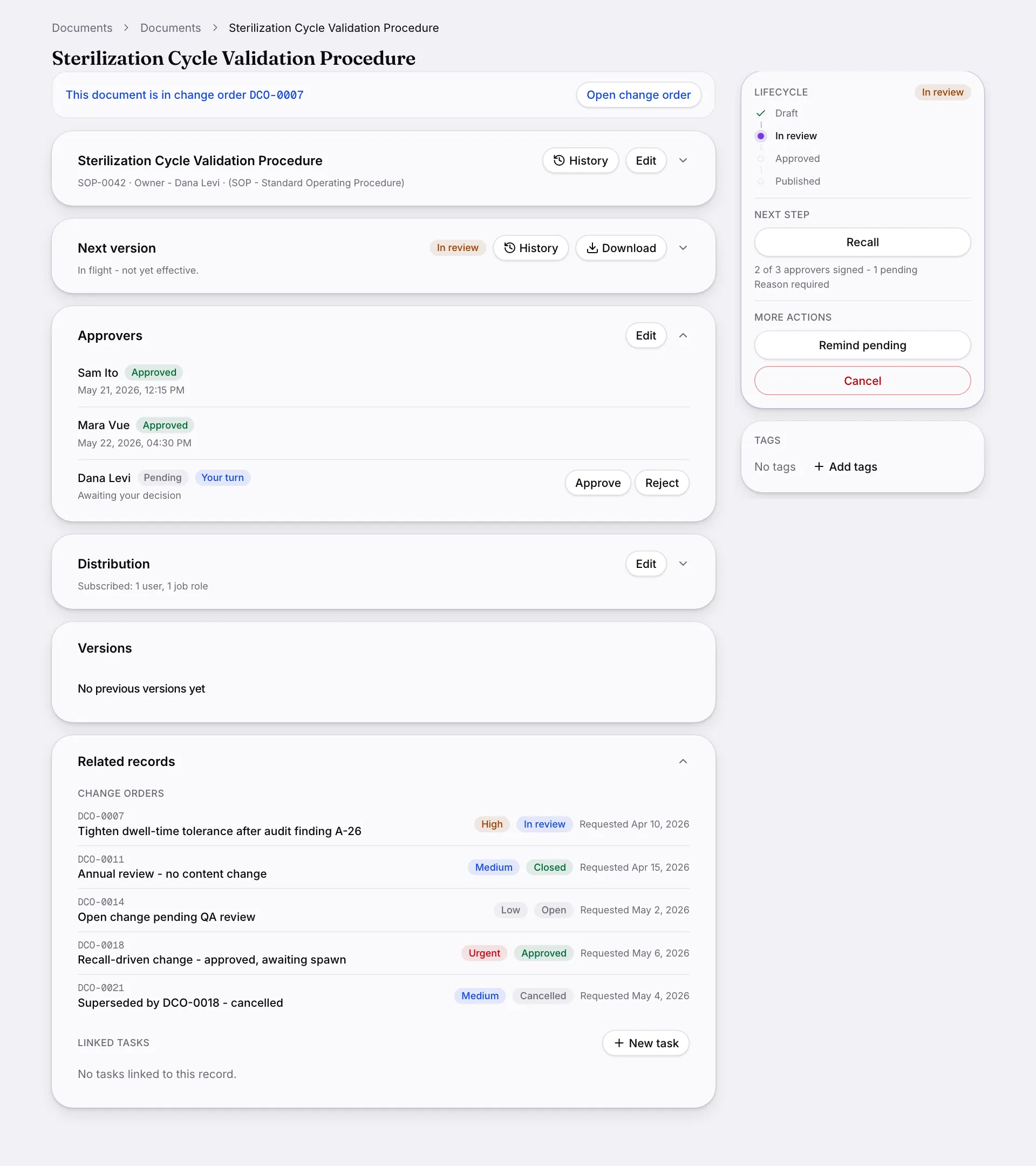
Out for approval
Approvers sign in turn. The card shows who has signed, who is still pending and whose turn it is now - and an approver can reject with a reason instead.
Step 3
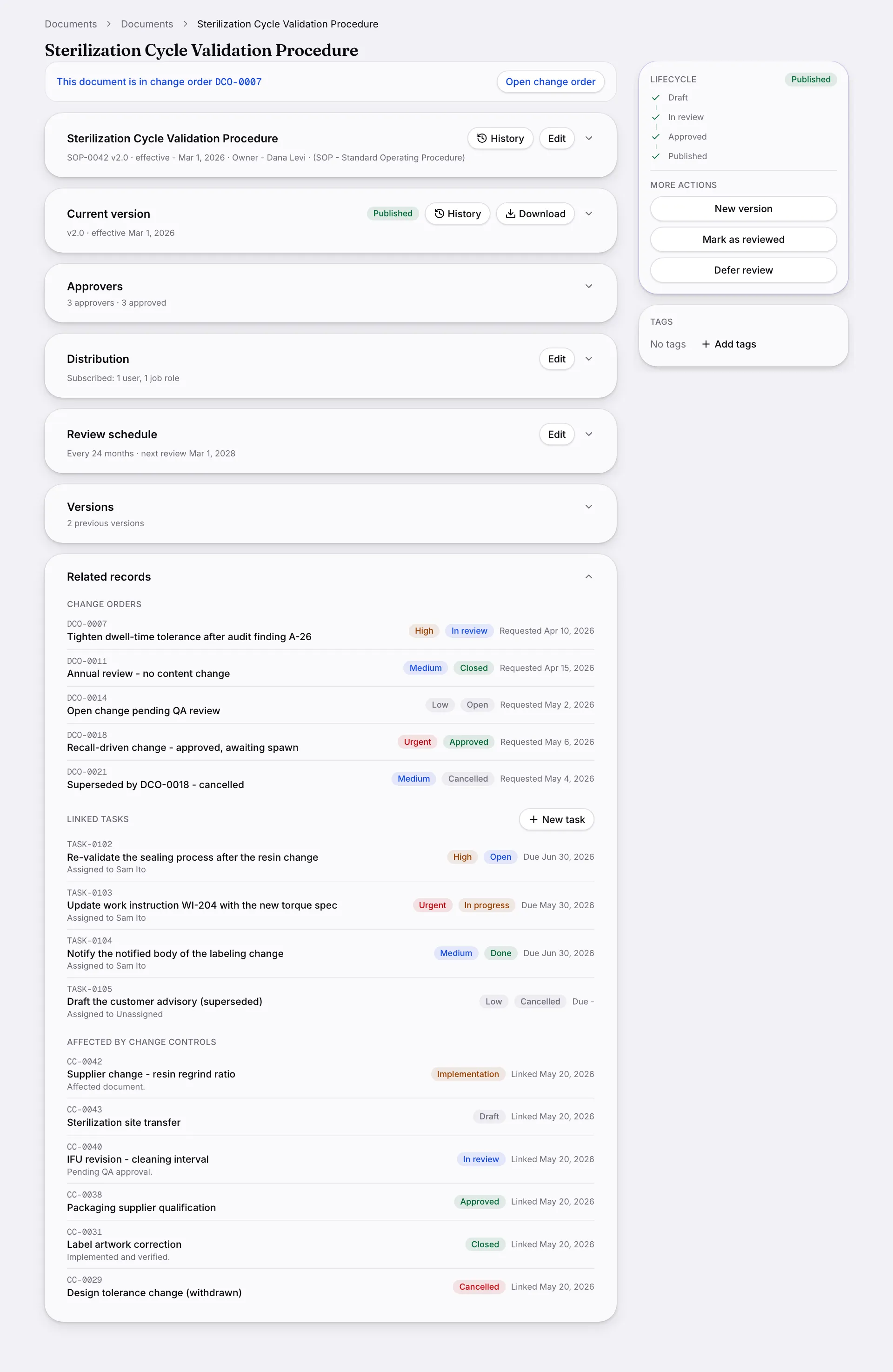
Published
The effective version is the one people are shown. Its next review date is already set from the document type, so a review coming due is not something anyone has to remember.
Step 4
Change order
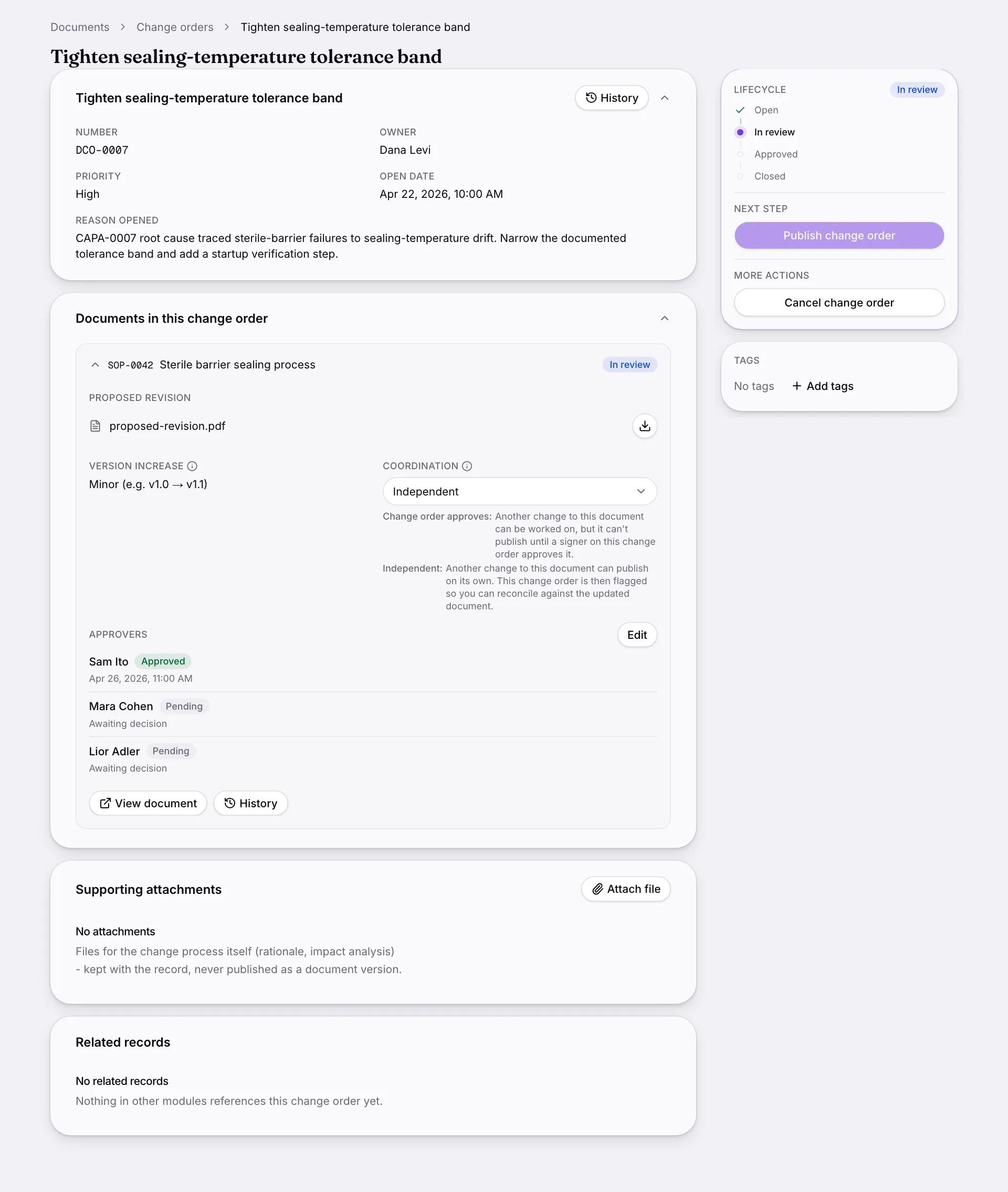
A revision travels as a controlled change: the reason it was opened, the proposed file, the version increase it will apply, and its own approval before anything publishes.
Step 5
Retraining
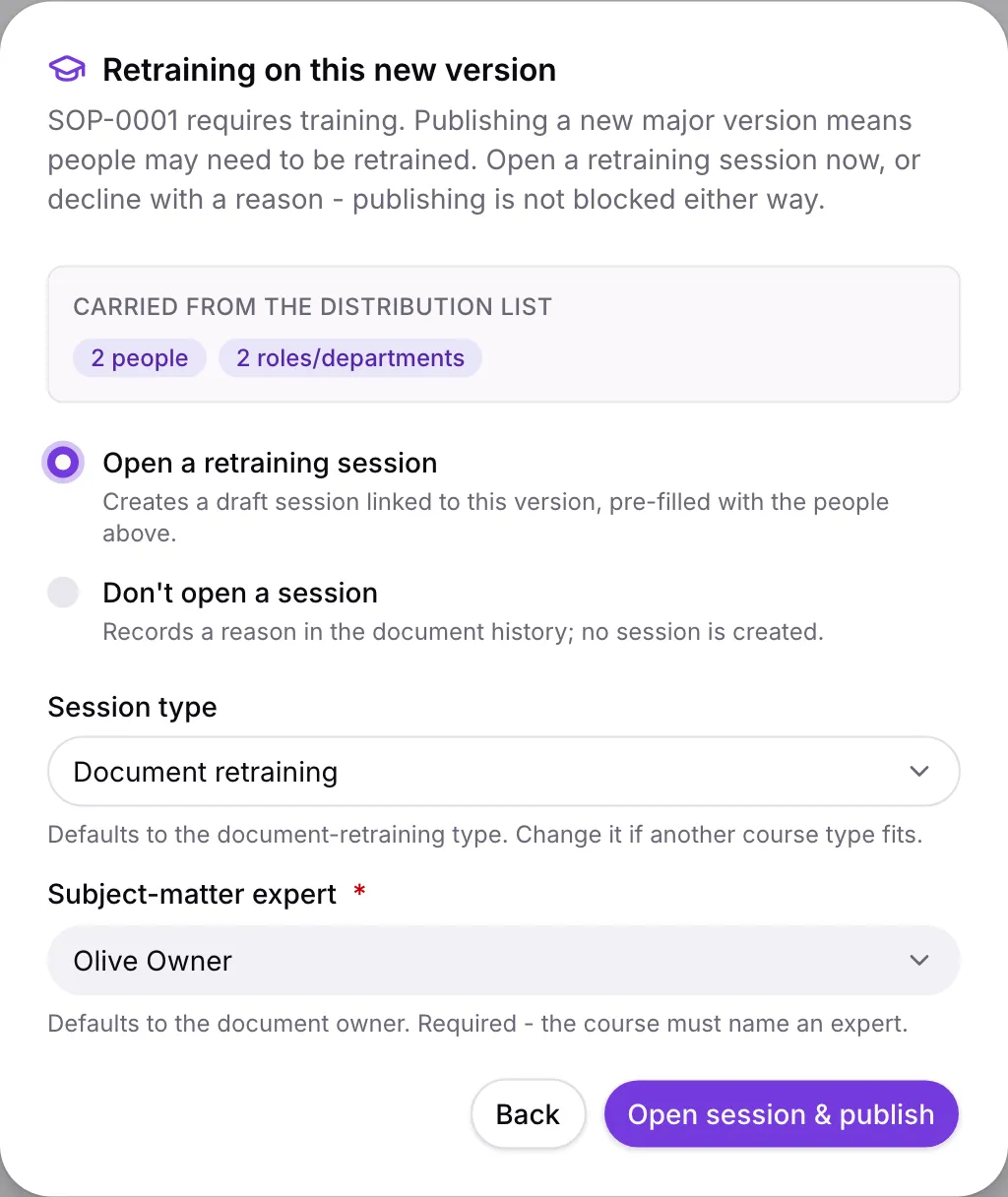
Publishing a version of a document that requires training offers the retraining session there and then, carrying the people from its distribution list. Declining is recorded with a reason.


Audit → non-conformance → CAPA
A finding that has to end somewhere
One chain, followed from the audit that raised it to the signature that closes it. Each record links back to the one that spawned it, so the trail reads in both directions.
Step 1
The audit
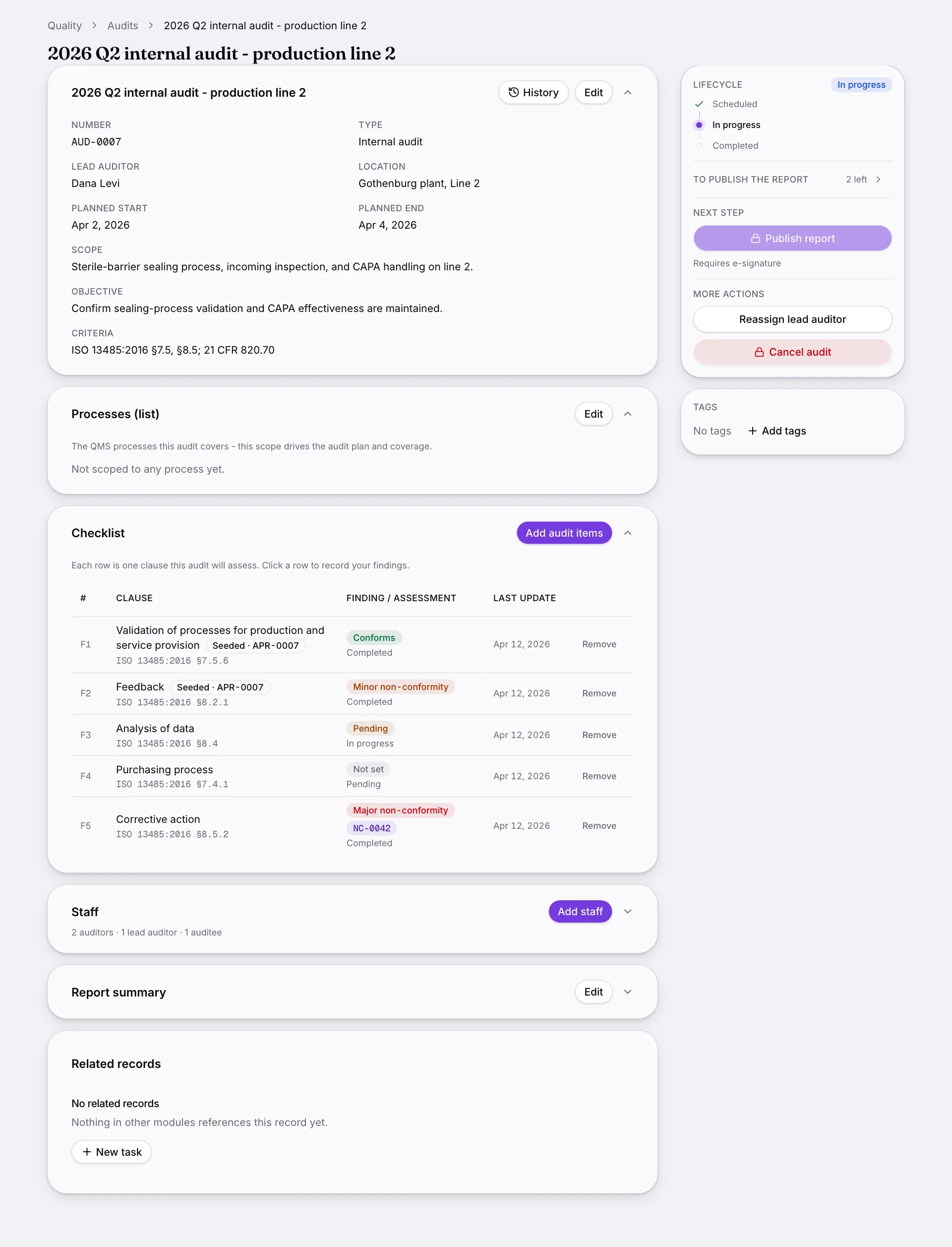
The audit is worked clause by clause against the standard it cites. Each row records what was assessed and what was found - conforming, or a non-conformity that needs to go somewhere.
Step 2
The non-conformance
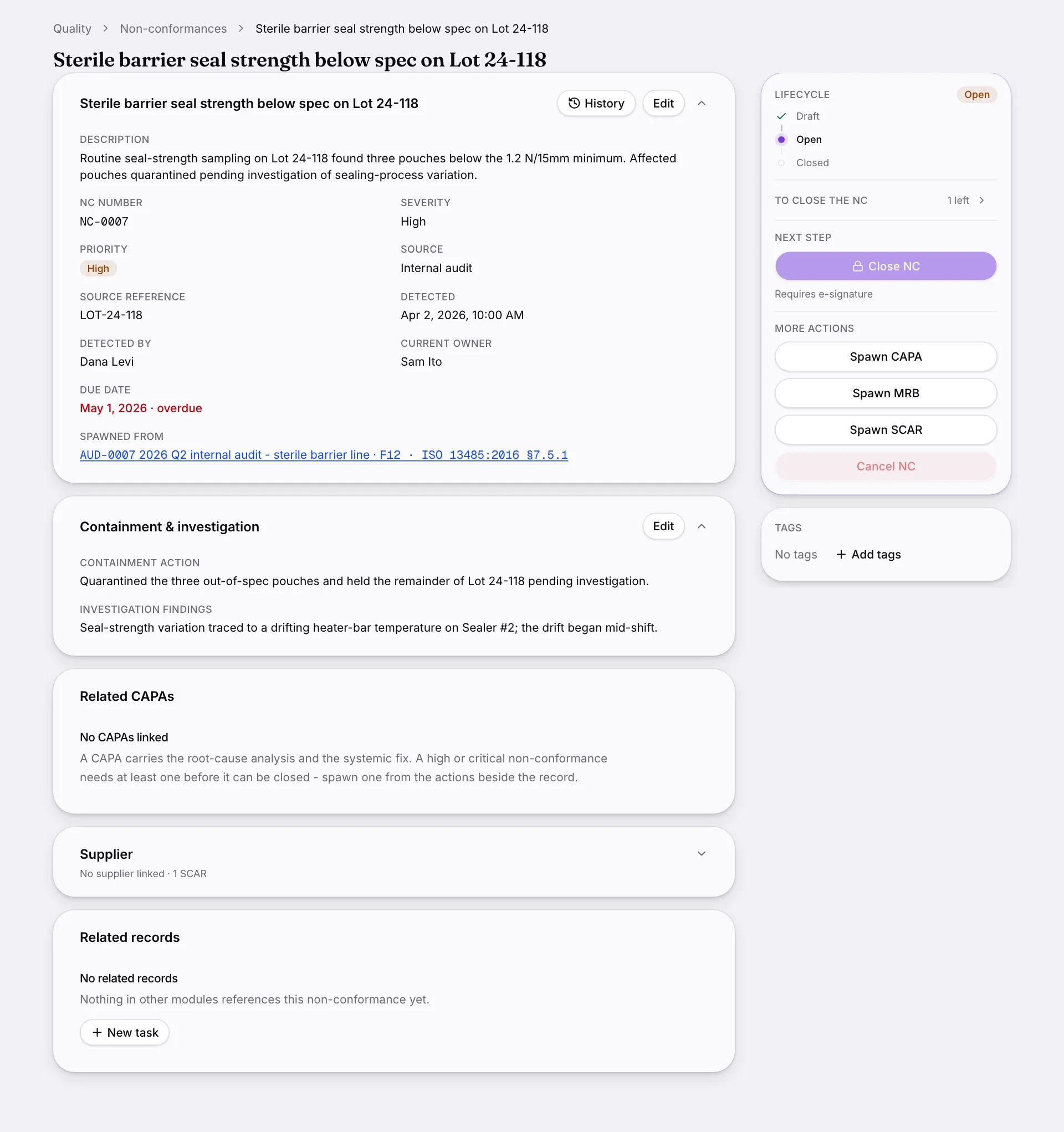
A finding raised as a non-conformance keeps the link back to the audit finding and the clause it failed. Containment and investigation are captured on the record, not in an email.
Step 3
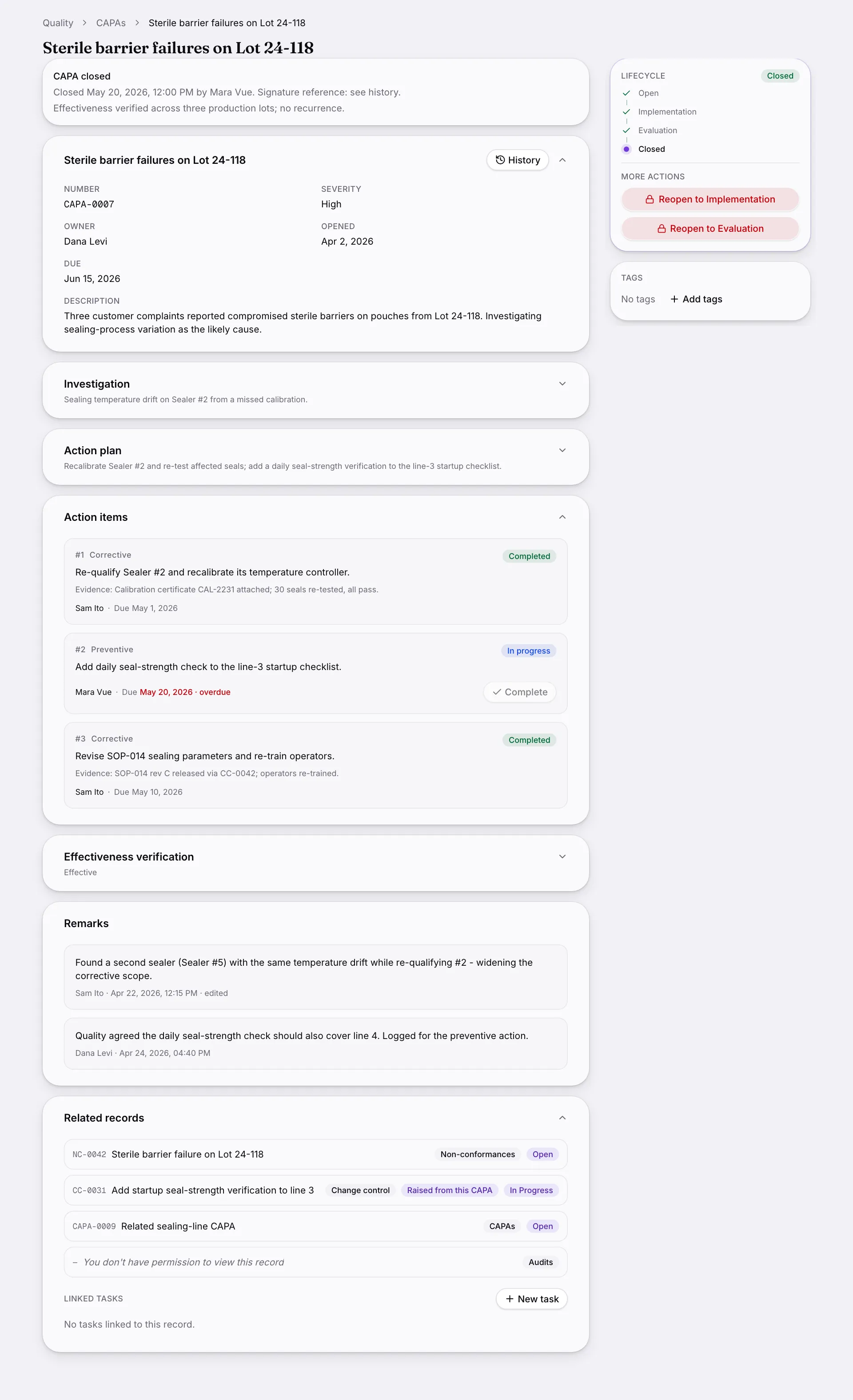
The CAPA
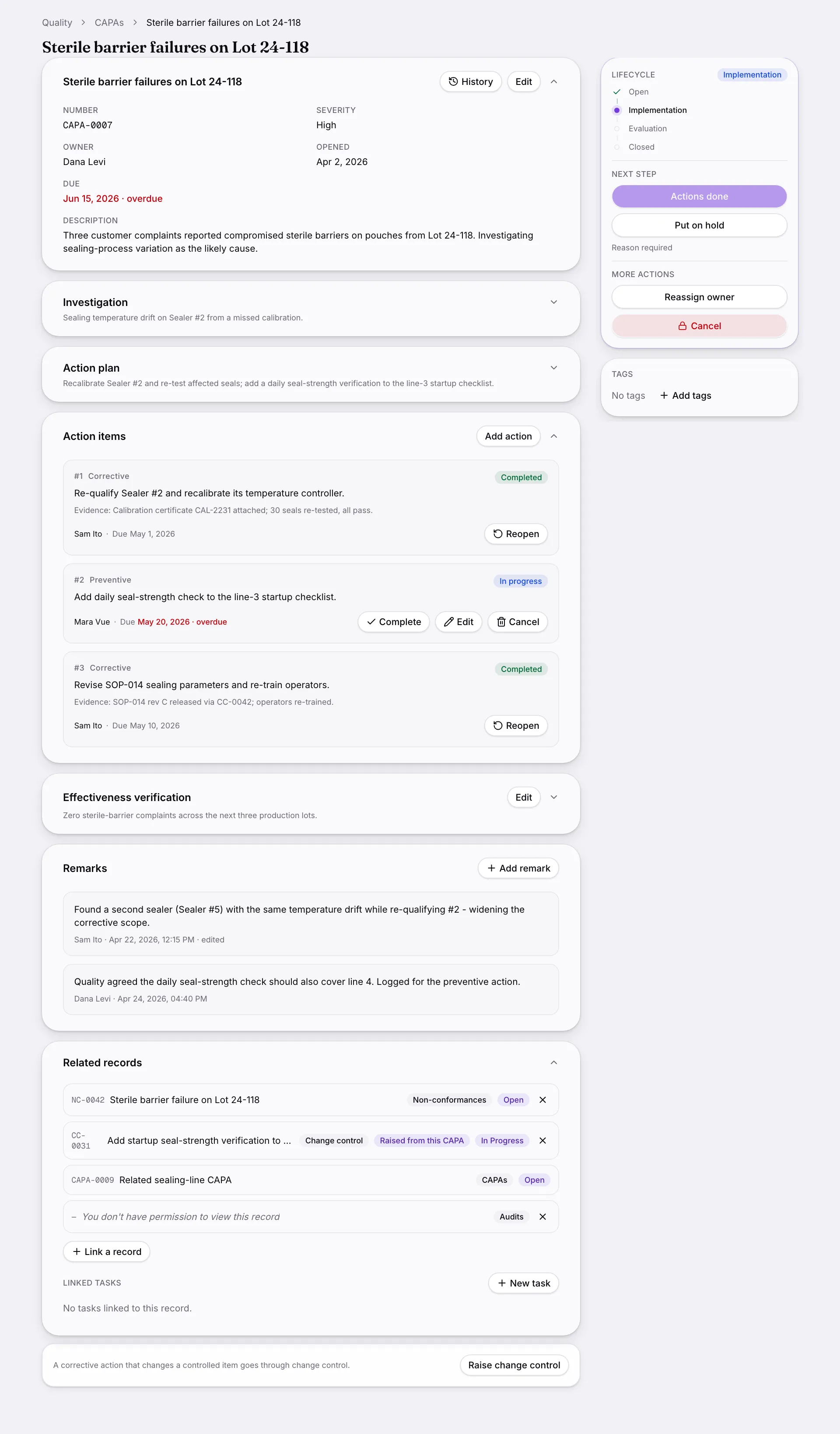
Raised from the non-conformance, with corrective and preventive actions tracked as separate items - each owned, dated and evidenced as it completes.
Step 4
The effectiveness check
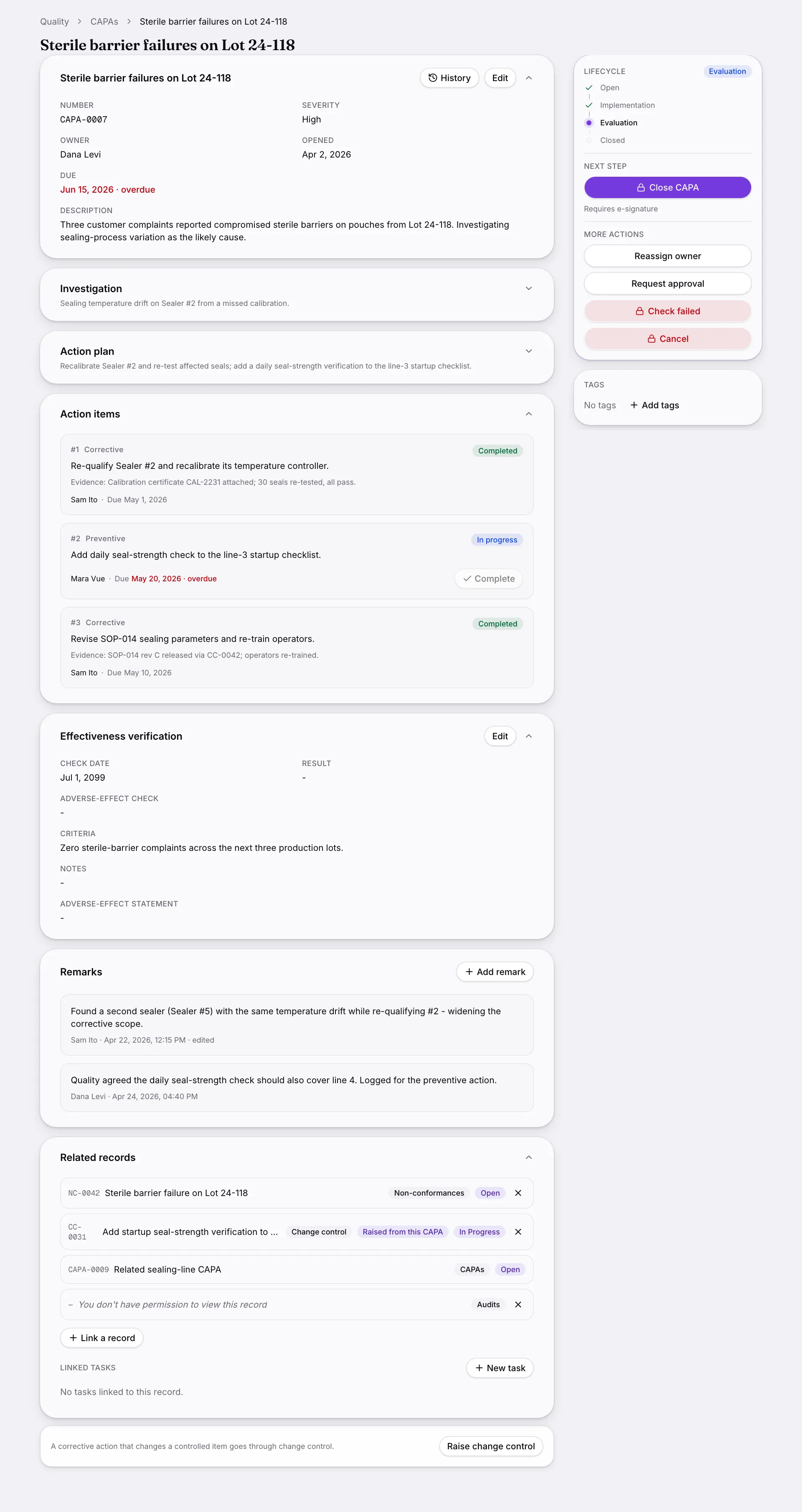
A CAPA does not close because the work got done. It moves to evaluation, and the check can fail and send it back. Closing takes an e-signature.
Step 5
Closed
The closure carries who signed it, when, and what the effectiveness check actually found - the paragraph an auditor asks for, already written down.